Inside Costco – No Membership Required

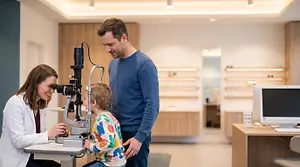
Children's Vision
Vision is arguably the most important of the five senses; it plays a crucial role throughout childhood and beyond. Yet many parents don't understand how vision helps their children develop appropriately. Children's eyes are still developing, and early detection of vision problems is essential to ensuring healthy visual development and academic success.
At MSP Eye Associates, our eye care teams in Woodbury and Rochester provide comprehensive pediatric eye exams tailored to each stage of your child's development — from infancy through the teenage years.
Children's Vision Topics
Vision Therapy for Children
An individualized program of eye exercises and other methods can treat non-refractive vision problems such as eye alignment and lazy eye. Vision therapy helps children develop the visual skills they need for learning, reading, and everyday activities.
Children's Vision — Frequently Asked Questions
How often should your child's eyes be examined? What's the difference between a school vision screening and a comprehensive eye exam? Get answers to common questions parents have about pediatric eye care.
Your Infant's Visual Development
Knowing the expected milestones of your baby's vision development during their first year of life can ensure your child is seeing properly and enjoying their world to the fullest. Early eye exams help detect conditions like strabismus (crossed eyes), amblyopia (lazy eye), and refractive errors that are much easier to treat when caught early.
Are Contact Lenses a Good Choice for Kids?
Contact lenses offer advantages in the areas of sports and self-esteem. But when is your child old enough for contacts? Our doctors can help you evaluate whether your child has the maturity and responsibility required to wear contact lenses safely.
Controlling Nearsightedness in Children
Certain types of contact lenses and eyeglasses may play a role in slowing the progression of myopia, or nearsightedness. Myopia is becoming increasingly common among children. Our doctors can discuss myopia management options — including special contact lenses and orthokeratology — to help reduce the long-term impact of nearsightedness on your child's vision.
Why Children's Eye Exams Matter
Many children with vision problems don't complain about poor eyesight because they assume everyone sees the world the same way they do. A school vision screening is not a substitute for a comprehensive eye exam — screenings only catch a fraction of the vision problems that can affect your child's learning and development.
The American Optometric Association recommends the following schedule for children's eye exams:
- Infants (6–12 months): First comprehensive eye exam
- Preschool (ages 3–5): At least one comprehensive eye exam
- School-age (ages 6–17): Annual eye exams, especially if there are concerns about vision or learning
Early detection is key. Many vision conditions — including amblyopia (lazy eye), strabismus (crossed eyes), and significant refractive errors — are much easier to treat when identified early in childhood.
Warning Signs of Vision Problems in Children
Watch for these signs that your child may have a vision problem:
- Squinting or closing one eye to see better
- Sitting very close to the TV or holding books close to the face
- Frequent eye rubbing or blinking
- Tilting the head to one side
- Avoiding reading or other close activities
- Complaints of headaches, eye pain, or tired eyes after reading
- Difficulty concentrating on schoolwork
- One eye drifting in, out, up, or down (strabismus)
- Eyes that look red or appear watery
- Sensitivity to light
If you notice any of these signs in your child, schedule a comprehensive eye exam as soon as possible. Early treatment can prevent lasting vision problems.
Schedule Your Child's Eye Exam Today
Give your child the gift of clear vision. Our experienced eye care teams at MSP Eye Associates serve Woodbury and Rochester. Contact us to schedule a comprehensive pediatric eye exam.